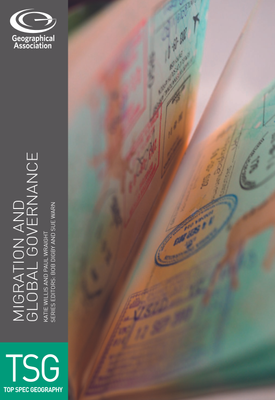
Top Spec Geography Migration and Global Governance
About this book
Migration is a globally significant process that shapes regional economies. At the local level, it has profound impacts on families and communities. Migration is also important for its connections to key geographical themes such as demographic, economic and social change, inequality, and urbanisation. The book covers: migration as a response to demographics and economic development; how global governance shapes migration, including flows of refugees; the theoretical background to migration, seeking to explain the geography of different migrations; the consequences of migration for host and source countries; why migration can be contested, through concepts such as multiculturalism, nationalism, and populism; and how human experiences of migration vary.
Related books